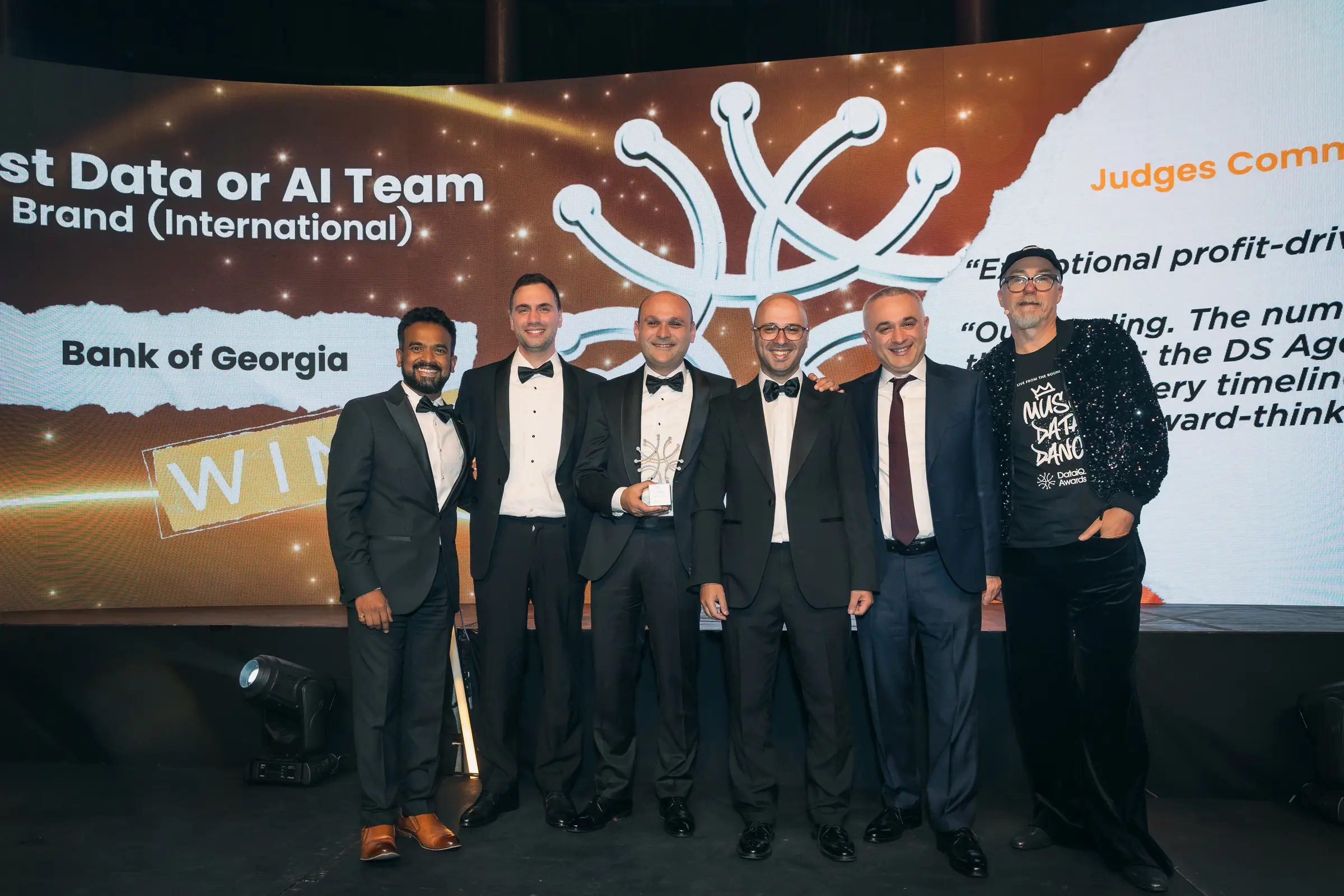
Bank of Georgia’s Data Analytics and AI team is around 70 people inside a bank of 9,000. Over three years it has changed from a specialist function that delivered models into one of the engines of the bank’s commercial performance. The annual impact of its non-risk AI work has grown tenfold, and around 80% of its AI projects reach live business use against an industry benchmark of roughly 20% which was achieved while getting smaller. The change rests on a single standard: a technically successful model that never changes the business is a failed project.
Getting there meant changing how the team works with the rest of the bank, and how it judges itself. Business units now put a senior person on AI initiatives full-time and their leaders sit in the weekly decisions, while the data and AI professionals help design the process change around their models and stay accountable until the result is running in the business.
Business consulting skills sit in the team’s capability framework alongside technical ones, data scientists spend time in branches with frontline colleagues, and incentives follow business outcomes rather than delivery. In operations, 98% of retail unsecured lending is now underwritten automatically, turnaround on small-limit SME lending has fallen from four days to one minute, and the bank’s Georgian-language AI assistant resolves 72% of customer chats without a person. Business partners rate their satisfaction with the team at 86%.
An internal self-service platform lets colleagues with no technical background build their own assistants for everyday work, supported by a GenAI centre of excellence and around 100 AI ambassadors across the bank. Weekly AI use in back-office teams has risen from 10% to 70%, colleagues have built almost 400 assistants now in daily use, and some teams report productivity gains of up to 40%, with data masking and human review of anything customer-facing built around them. The team is 45% women, with women in 35% of management roles, annual attrition runs at about 10%, and Korn Ferry’s 2025 survey placed it above global norms on 15 of 20 dimensions, including 87% for psychological safety and 85% for trust in managers.