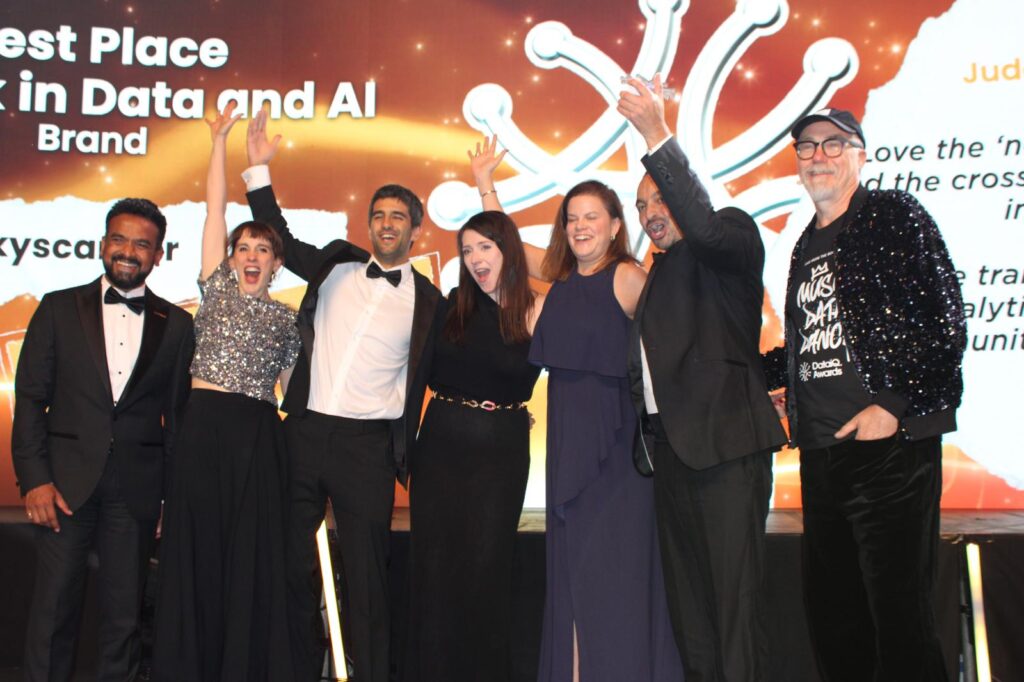
Skyscanner has responded to AI’s rapid transformation of analytics with the philosophy “nobody gets left behind.” With 96% of its active Analytics team using Claude Code, company-wide learning reaching hundreds of employees, and individual experiments becoming shared infrastructure, Skyscanner has combined rapid innovation with a culture built around helping colleagues develop together.
When GenAI began changing what analysts could do, Skyscanner faced a choice of moving at the speed of the most enthusiastic early adopters or investing in bringing the whole team with them. It chose the latter.
Its philosophy of “nobody left behind” has shaped everything from structured AI learning and peer support to the autonomy analysts receive to experiment, build, and rethink their roles. Skyscanner has created an environment where AI adoption is being treated as a collective transformation rather than an individual race.
Making AI Adoption Inclusive
Skyscanner’s approach is backed by significant adoption. Between January and April 2026, 44 of 45 active Analytics team members used Claude Code, generating 117,391 API requests. That represents 96% adoption, with an error rate of just 1.3%. Achieving that breadth meant investing deliberately in colleagues who might otherwise have struggled as workflows changed.
Three Nobody Left Behind sessions covered Claude Code, VS Code, GitHub, Databricks connectivity, context management, and responsible use. Rather than completing artificial exercises, participants cloned real repositories, connected to live environments, and applied the tools to actual work. Sessions were recorded, peer-written guides were shared, and the team created a common GitHub onboarding resource.
The same philosophy extends beyond analytics. Data Unlocked reached more than 200 employees in March 2026, bringing hands-on data and AI learning to colleagues across Legal, Marketing, HR, Customer Experience, and engineering support functions.
An AI Champions network provides further peer support, while Show and Tells, listening sessions, and the Chaos Defrost initiative create opportunities to share learning and address what is not working.
“Love the ‘nobody left behind’ ethos and the cross-organisational upskilling in data and AI.”
“A true transformation in how data and analytics is done, with a strong community where ‘nobody is left behind’.” – Judges’ comments
Giving People Permission to Build
Inclusion has not come at the expense of experimentation. Skyscanner expects analysts to evolve from executing individual tasks towards orchestrating multiple AI-augmented streams, with a target of spending 70% of their time on strategic work such as influencing roadmaps, defining metrics, and shaping commercial decisions.
Employees are given significant autonomy to turn ideas into working capabilities. One analyst’s experimentation with agentic AI became the Skyline Analytical Intelligence Project, an AI-native platform combining domain-specific personas with a shared semantic layer. Another initiative created a fully autonomous daily performance briefing that brings together data, live news, and calendar context across 40 markets before publishing an executive briefing each morning without manual intervention.
Cross-functional experimentation is equally encouraged, with Analytics working alongside Product, Engineering, Flights Commercial, and Packages to turn specialist knowledge into shared infrastructure.
A Rising Tide
The most important workplace metrics are participation:
- 96% Claude Code adoption across active Analytics team members.
- 117,391 API requests between January and April 2026.
- Just 1.3% error rate despite extensive experimentation.
- 200+ employees participating in Data Unlocked in March.
- A target of 70% of analyst time devoted to strategic work.
Behind those figures is the cultural principle that knowledge gained by one person should become capability available to others. Peer-written guides, mentoring, recorded learning sessions, shared technical resources, and the AI Champions network all reinforce that expectation.
AI may be changing what it means to work in analytics, but Skyscanner’s response has bridged any divide in its workforce between those who can keep pace and those who cannot. It has combined individual autonomy with collective development, creating a workplace where moving quickly and bringing people with you are treated as complementary ambitions.