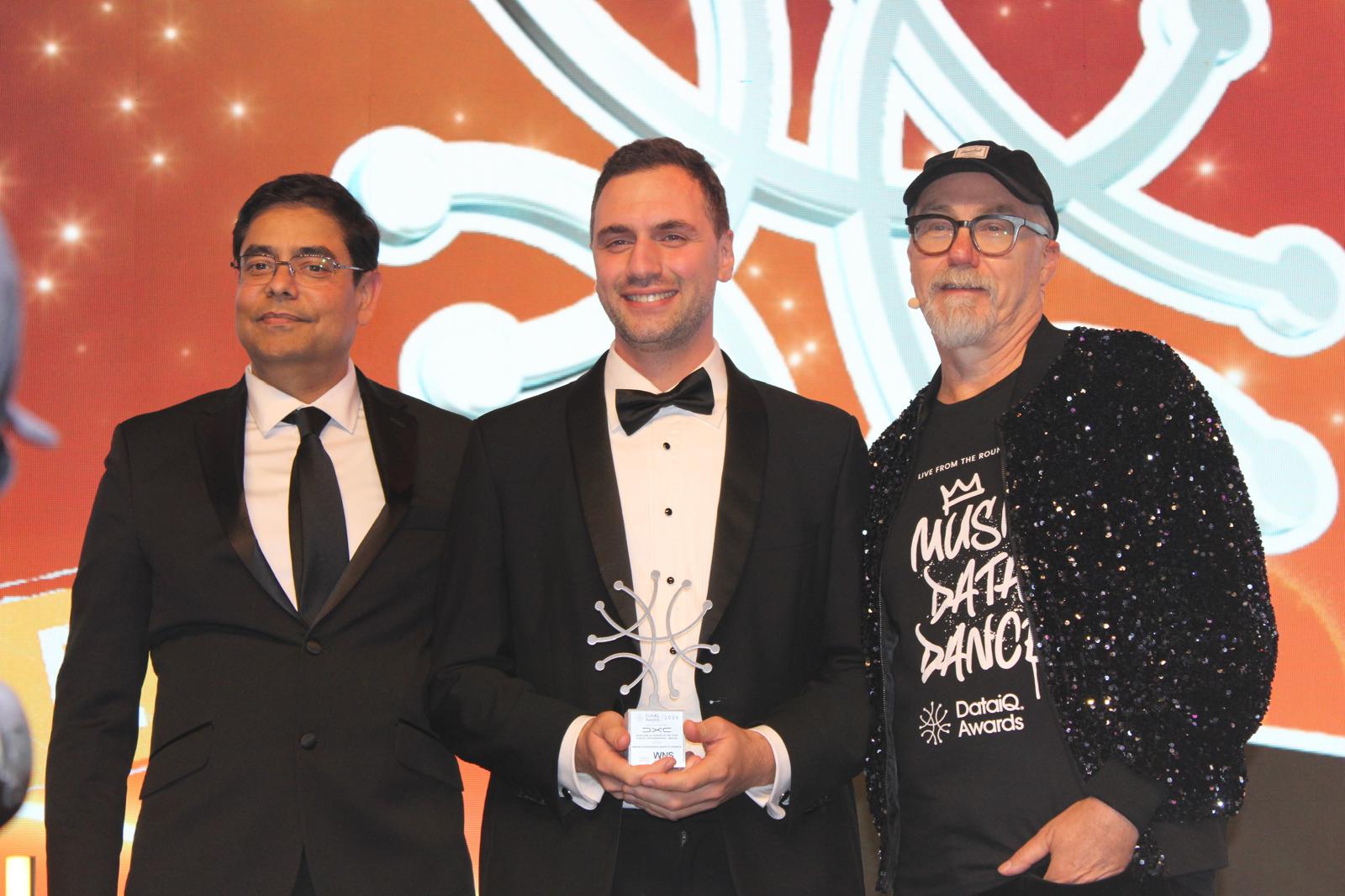
Mikheil Nadareishvili became Chief Analytics Officer at Bank of Georgia in 2022, with an ambition that sounded improbable at the time: a data and AI practice built in Georgia, in Georgian, on the bank’s own infrastructure, good enough to be measured against the best anywhere. He works to the principle that a great AI model without business impact is a failure. The annual impact of the bank’s non-credit decisioning AI work has since grown tenfold, and around 80% of the bank’s AI use cases reach live processes against an industry benchmark of roughly 20%.
Mikheil’s first change was structural. Analytics teams had built models and handed them over; he replaced that with joint ownership, bringing business stakeholders in from the start and holding his own people accountable for outcomes that actually materialise. When demand outgrew the team several times over, he backed an in-house multi-agent system rather than simply adding headcount. When smaller AI opportunities began piling up behind the team, Mikheil opened the tools to the whole bank through an adoption programme built on decentralising, democratising and distilling what worked, supported by around 100 AI ambassadors.
Weekly AI use across the bank’s 9,000 employees rose from 10% to 55% within six months, reaching 70% in back-office teams, and colleagues have built almost 400 AI assistants now in daily use. Governance was designed alongside the rollout with Legal, Compliance and InfoSec, and the bank reports a year of scaling without a major incident.
Mikheil has invested where the global technology market does not serve Georgia, backing an in-house Georgian speech AI pipeline that processes more than 100,000 hours of audio a month at roughly one-sixth the cost of commercial alternatives. The culture around the work matters to him as much as the delivery. His team of around 70 is 45% women, with women in 35% of management roles, its graduate programme draws some 170 applications for every place and keeps 75% of those it recruits over three years, and Korn Ferry’s 2025 survey placed the team above global norms on 15 of 20 dimensions, including 85% for trust in managers. Several of his people came home from top talent hubs such as London, Berlin, and Seattle to do this work in Tbilisi.