
Trust in the Digital Age
In this increasingly digital world, do individuals understand the amount and worth of the data they generate? Are organisations transparent about how they use and store this personal data? Download this report by Consentric today to explore why earning trust and why rebuilding trust is important and key factors shaping transparency
DataIQ Leaders briefing: Automation makes its mark

Just under half of UK organisations are already using automation in some form, with the rest still delaying adoption out of concerns about skills, resources and outcomes. This whitepaper reports on the experiences of DataIQ Leaders members that were shared at a recent roundtable event.
Hacking data to find missing people and top talent

At the end of May, 22 data enthusiasts turned up at a building in the vicinity of Royal Mail’s iconic Mount Pleasant sorting office in central London for a charity hackathon. Not only did this event have a philanthropic goal, but it brough…
Why the Universal Data Hub?

The explosion of marketing technology has brought today’s businesses new and more relevant ways to communicate and engage with their customers. In this report, Tealium explores how to transform your business and customer experiences by connecting data across every customer touchpoint.
DataIQ Leaders briefing – Should the data industry have a professional institute?

Professions have institutes to accredit members and certificate their knowledge. Data practitioners have no such professional body. Does this obvious gap present an opportunity and, if so, how should it be tackled? This article considers the issues considered during a DataIQ Leaders breakfast briefing on the subject.
DataIQ Leaders briefing – Economists square up to data to find a formula for its value
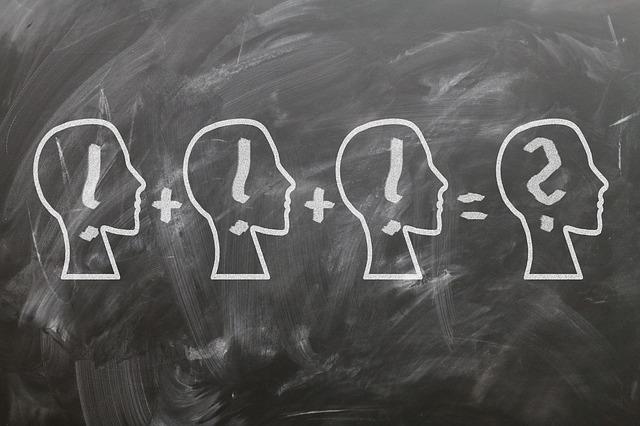
Putting a valuation on data as an asset has proven to be a cul de sac for most organisations. Yet governments are growing increasingly interested in how to extract more value from digital platforms through taxation. Which is why a growing number of economists are looking at new models for the value in data. This briefing explains their line of thought.
Recruitment practices: Hiring from within

Recrutiing the data and analytics talent you need is a perpetual challenge, which is why looking at all possible sources makes sense. Within your organisation there may be a ready-to-go, untapped pool of skilled workers with the right understanding of your business. This whitepaper considers the pros and cons of hiring internally.
Why Fry would say IA instead of AI
As part of a tour to promote her new book, Dr Hannah Fry took part in a discussion at the Royal Society of Arts last week. Some of the opinions she expressed included; why we don’t have to …
Myth-busting the dangers of a “big data algocracy”

Alongside faster, more efficient vehicles, the accelerated pace of progress in the automotive industry has resulted in more data than ever before. Connected cars, which are equipped with internet access, allow vehicles to collect data and share in…
Just 1% of businesses are fully data-centric says report

Only 1% of decision makers say their organisations are fully data-driven. Furthermore, 40% stated their company is between a quarter and halfway along that transformation journey from focusing on business intelligence to data and analytics. This i…
Camden Council and the benefits of opening data

Sudip Trivedi is the head of data and analytics, and connectivity business partner at Camden Council. Central to his role is improving the quality of data within the borough and allowing more people to access that data.
Trivedi came to the …
Understanding how human capital impacts on transformations

Transformations are a constant aspect of business management and data and analytics are both agents and enablers of them. Yet even the best-planned change programme can stall or fail. Underlying these issues, however, there are predictable patterns and reasons why problems emerge. This whitepaper looks at how human capital is often at fault.
DataIQ Leaders Discussion: Do you need humanities as much as science?

With so much emphasis being placed on recruiting candidates from science, technology, engineering and maths backgrounds, it can seem as if STEM is the only skills set that should be considered. But given the importance of soft skills, such as communication and team working, to the success of a data and analytics function, this whitepaper considers where humanities could play a part.
Machine learning – focusing on code misses the big picture

According to Rangarajan Vasudevan, CEO of data strategy company The Data Team, machine learning has received an extensive amount of hype and media coverage in recent times. However, he feels it is important to point out that machine learning syste…
Marks and Spencer to train staff in data skills

Marks and Spencer is to train over 1,000 employees in digital skills through a partnership with digital skills training organisation Decoded, with the aim of creating the world’s first data academy in a retail organisation. It also reflects th…
“No ivory towers” found on OS map for data knowledge sharing

According to Caroline Bellamy, there is a lot to be gained from having a data centre of excellence within an organisation. But she has a problem with the name and behaviour it encourages. Bellamy is the first chief data officer at …
Reading data right – the case for data literacy

“This illustrates the need for greater data literacy globally – consumers should be able to understand data not as an abstract concept, but as something that relates to their lives and the decisions they make every day.” These were the words of Dr…
Get data skills up to standard with ‘aristocrats’ leading the way

According to a new report, there are four types of people when it comes to understanding of and willingness to work with data. The most skilled people in terms of ‘data literacy’ are data aristocrats. The data aristocrat has a high aptitude for un…
Leaders discussion: Mental models of an effective analytics team

Team dynamics have a big impact on the effectiveness of the analytics function. Selecting the right candidates and understanding existing practitioners can be a worthwhile exercise for an analytics leader. This article looks at three psychological models that have gained traction in this discipline.
Turning the data and analytics function into a trusted advisor

The most advanced level of CARBON maturity sees the majority of senior management decisions being made on a stable base of trusted analytics with an ongoing feedback loop. This is by no means easy to achieve, however. This guidance looks at what builds trusted advisor status and the specific implications for data and analytics practitioners.
