
Only 1/5 of female students are looking at data professions

The benefits of a diverse workforce have been proven time and again, but improvements must continue to be made as new data shows only one in five female students are looking at data careers. Alex Roberts finds out what can be done.
CDO Challenges – What it takes to be a leader

In this instalment of CDO Challenges, we examine what it takes for data professionals to become a leader in their organisation, focusing on skills and attitudes that are required to drive a business to new data heights.
Why data has a better idea of how to run your business

If you could rebuild your organisation and its processes from the ground up with data and analytics at its heart, would you? For many organisations, it takes a crisis to tackle such a profound transformation. But as David Reed points out, this year’s Grand Prix winner, Jaguar Land Rover, is proof that courage has rewards.
Why you should attend the Way of the 100

The DataIQ Way of the 100 is the premier conference for data professionals, bringing together the leading minds in the data industry to discuss key topics, present on new developments and network with peers. Make sure you and your colleagues attend to take part in exclusive roundtables and presentations where you can improve your organisation’s data journey.
DataIQ Awards 2022 winner – The Professor Derek Holder lifetime achievement award: Helen Crooks
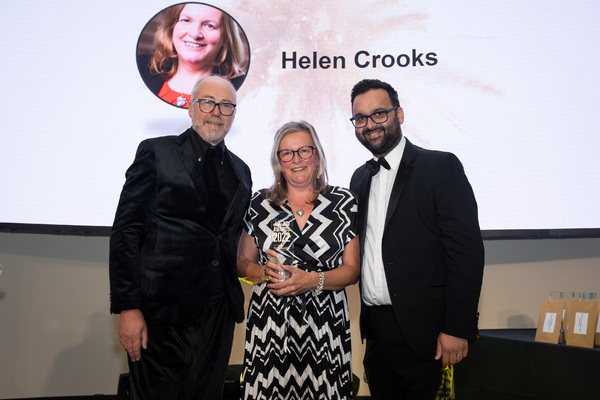
In a thirty-year career (and counting), Helen Crooks has worked client-side, vendor-side and for a regulator, with data running as the golden thread across every post she has held.
CDO Challenges – Building data literacy across an organisation

In this ongoing series, DataIQ examines the challenges faced by CDOs such as how data literacy can be built across an entire organisation. We will look at where CDOs can identify the starting points and the introductory steps that can be taken to create a foundation for business-wide success.
5 reasons why data literacy is so hard to achieve

Just as owning a Ferrari does not make you a Formula One driver, so having built a centralised data asset does not make your organisation data literate. Plenty of obstacles get in the way of building out a shared culture and set of behaviours. David Reed identifies five typical challenges.
Should businesses decentralise data to keep evolving?

It is widely accepted that for many business structures decentralisation is the way forward, but how far should a business decentralise to continue its evolution? In this article, DataIQ provides an overview of the three main decentralisation options and their pros and cons.
More than just a number: Expressing the non-financial value of data

An ongoing struggle for those working in data and analytics has been communicating the value of data outside of common metrics such as financial implications. DataIQ member Ordnance Survey discusses highlighting real-world impacts of data and the use of storytelling to further legitimise the standing of data in an organisation and to improve a wider understanding outside of the data office.
Levelling up data positions: Regional salary differences and remote working

In the UK, London has always been the centre for the highest paying positions followed by other major cities, but with the development of remote working capabilities this trend may not be true much longer. A recent report has shown that the gap between pay for similar data jobs across the UK has been decreasing rapidly.
Maintaining Possession: Examining the growth of data in football

Data teams have been readily adopted in the corporate world, but the uptake of data offices in professional football has been slower. To take us through the developing world of football data, Luke Stopforth, head of data and technology at Brentford FC sat down with DataIQ to discuss the ways in which Brentford FC helped add momentum to the adoption of data offices, how data is being used at the highest levels of competitive football and the concerns surrounding ownership.
Howzat? The data behind sport
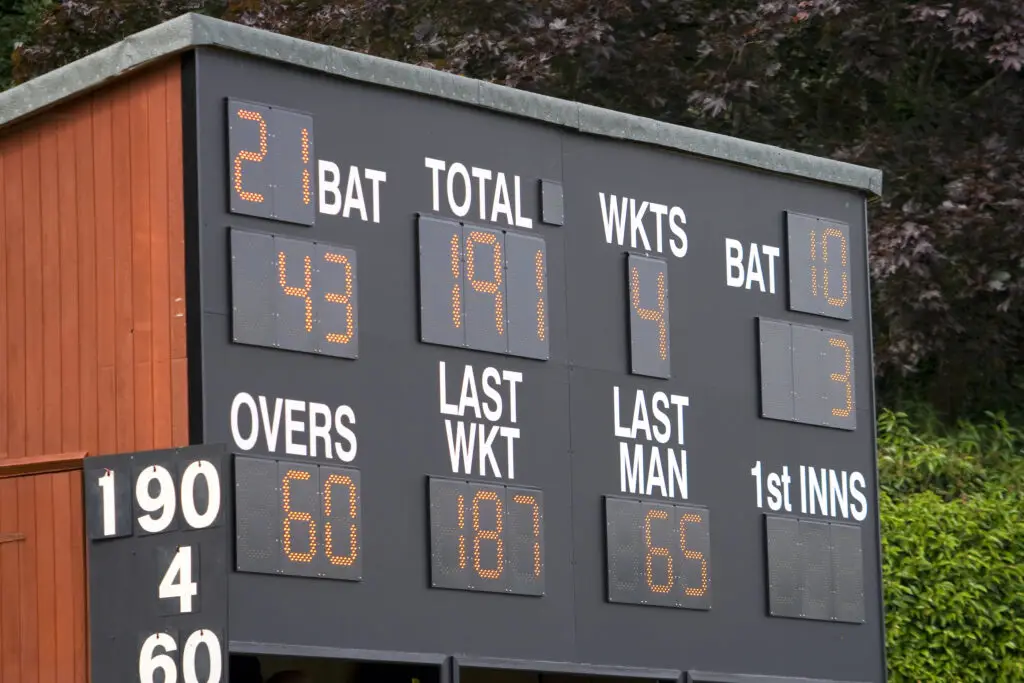
The variation in gameplay for cricket is diverse thanks to multiple competition formats and intricate data knowledge can make the difference for a test match lasting five days. To explain this in more detail, Hannah Jowitt, Disability and Pathway Analyst at the England & Wales Cricket Board, spoke with DataIQ to explore the changes in cricket data in recent years, where it looks set to go and how data is helping select the future stars of the sport.
Reach for the stars: How The Telegraph is deploying editorial analytics

How is traditional print media adapting to the digital changes and demands of the modern reader? DataIQ sat down with Emma Wicks, head of editorial insight and analytics at The Telegraph, to discuss the evolving landscape for content, how journalism uses metrics and how a well-established business is keeping up with new platforms.
Keep your eye on the ball: How data analysis is impacting football in Spain

Football is the number one sport in the world, but how can it be improved for players, teams, fans and more? Rafael Zambrano, head of data science at LaLiga, spoke with DataIQ to explain where data and analytics were for Spain’s top flight football league and where it is set to go in the future.
DataIQ 100 USA names Naras Eechambadi number 1, showcases American data leadership

Launch of the most influential 100 people in data working in the United States of America identifies high-flying chief data officers and chief analytics officers, with data leader of Universal Music Group heading the pack.
How the Data Science Campus is driving up data literacy in Whitehall

During the pandemic, data has underpinned policies that have placed unprecedented restrictions on our everyday lives. Naturally, this has brought a greater degree of public scrutiny to the application of data in government decision making. To that end, the Data Science Campus has been running a “data masterclass for senior leaders” course since late 2020 – with the aim of driving up data literacy in Whitehall.
Data for social purpose in the London Borough of Camden

The London Borough of Camden’s CDIO Tariq Khan discusses the council’s data-driven pandemic response and its ambitious new data strategy.
NHS England partners with Ada Lovelace Institute to combat AI bias in healthcare

NHS England has announced plans to pilot an algorithmic impact assessment, designed by the Ada Lovelace Institute, to combat the potential risks associated with AI in healthcare.
Diversity, equity and inclusion to be celebrated at the 2022 DataIQ Awards
Diversity, equity and inclusion (DEI) in the data industry is to be celebrated at the 2022 DataIQ Awards, the industry’s most prestigious awards ceremony, hosted in partnership with Rockborne.
The GSK approach to driving up data literacy

GSK’s Paul Sarjeant and Kelly Katerakis outline the story behind the establishment of GSK’s Data Academy – an organisation-wide initiative to drive up data literacy.