
Today’s CDO is firmly embedded within enterprise leadership, with DataIQ’s findings showing that 94% of senior data and AI leaders now having direct or regular access to the C-suite, while strategy, governance, AI, analytics, platforms, literacy, engineering, and data products have all become core role elements. The CDO has moved from specialist to enterprise operator.
At the point the role has reached the centre of business decision-making, capacity has emerged as another challenge.
Research from Seriös Group and this year’s DataIQ 100 findings point to the uncomfortable reality that organisations have transformed the CDO into one of the most strategically important executives in the business but have failed to redesign the role to make that expansion sustainable. The result is not widespread burnout in the traditional sense, but a leadership function operating permanently close to its limits.
Success has become complicated
The evolution of the CDO has been gradual enough that many organisations have barely noticed how dramatically the role has changed. Seriös Group found that 87% of data leaders say their responsibilities have increased over time. Crucially, these responsibilities have accumulated rather than replaced one another: governance never disappeared; compliance remained; data quality stayed critical; AI, cybersecurity, literacy, commercial accountability, and enterprise transformation have been layered on top.
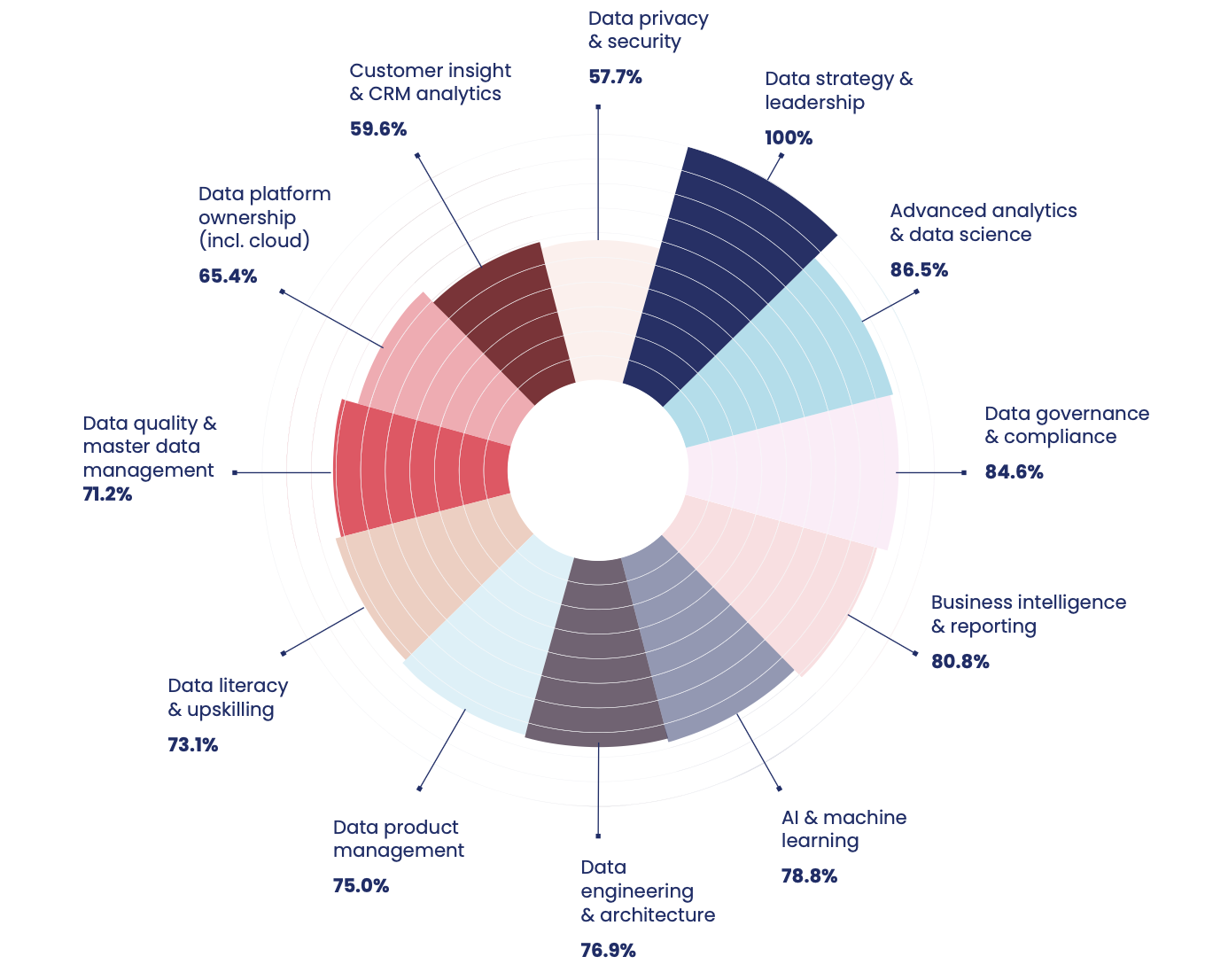
Today’s CDO typically owns eight to ten major disciplines, including strategy, governance, advanced analytics, AI, engineering, data products, business intelligence, literacy, data quality, and increasingly platform ownership. Strategy remains universal, but governance, AI, and analytics are now almost equally expected parts of the remit. This is now an enterprise leadership role delivered through data.
The invisible workload
Most CDOs appear to be coping as almost half report meeting expectations comfortably, while another 18% say they regularly exceed them. Only a small minority describe themselves as close to burnout. Those figures might suggest the profession is thriving, but it demonstrates the opposite.
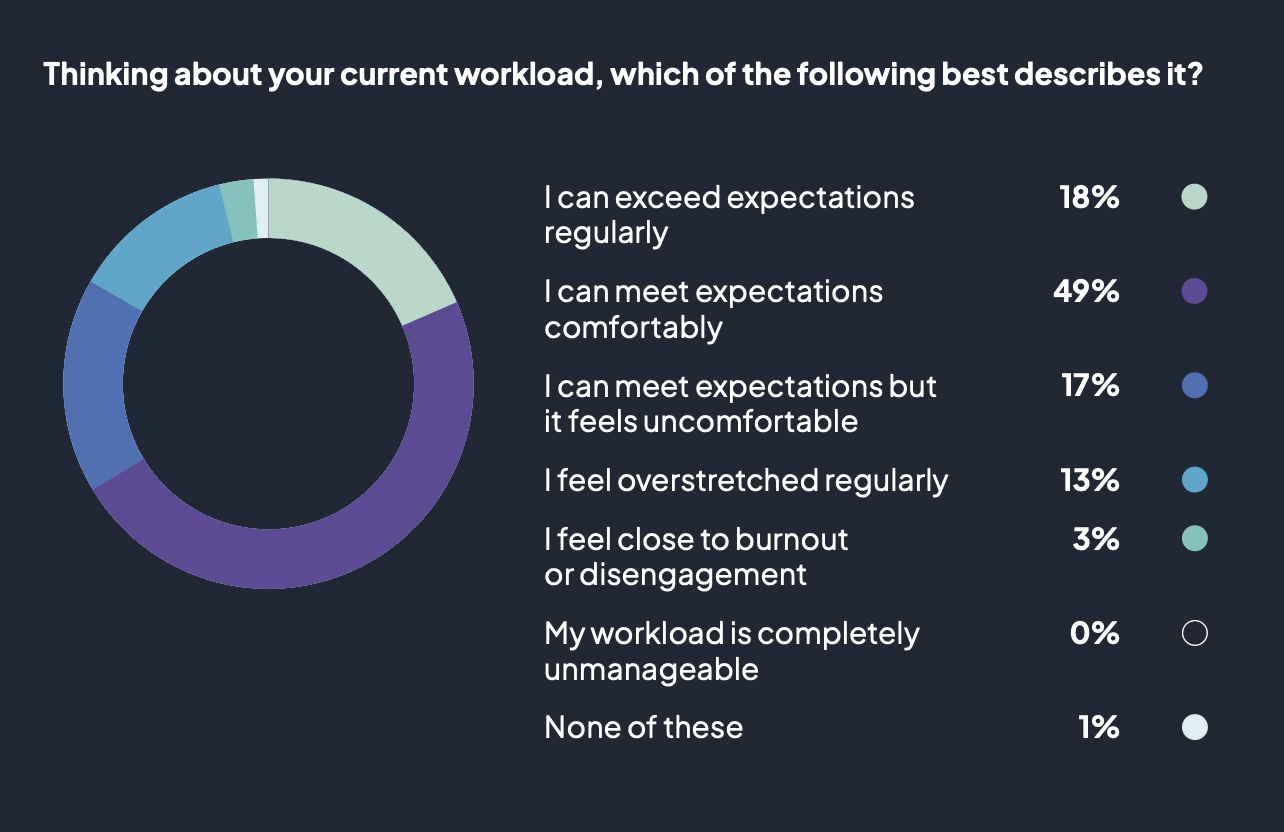
Around one-third of respondents describe themselves as uncomfortable, overstretched, or approaching burnout. More importantly, the qualitative interviews reveal leaders constantly making compromises that performance metrics fail to capture, including delaying projects, reprioritising work, carrying technical debt, and accepting that parts of the agenda will not get done.
The issue is that delivery increasingly relies on sustained trade-offs. Burnout is often framed as an individual wellbeing issue, yet the evidence from both reports suggests the growing problem is executive capacity.
Accountability has expanded faster than authority
The Data Responsibility Rift is a concept introduced by Seriös Group. Data leaders are increasingly accountable for enterprise outcomes; however, ownership of the underlying data remains distributed across functions, business units, technologies, and operational teams. This means that responsibility is concentrated, while control remains fragmented.
Rather than describing overload directly, the DataIQ 100 findings show that the CDO has become an enterprise coordinator, an industrial asset manager, and a so-called “honesty broker” between AI ambition and operational reality. Success depends less on hierarchy than influence, less on technical expertise than organisational alignment.
The same structural challenge is that modern CDOs are accountable for outcomes they cannot deliver alone, which fundamentally changes the nature of leadership.
AI has not simplified the role
If there was once an expectation that AI might automate elements of the CDO’s workload, it seems the opposite has happened. There is no doubt that AI has increased executive expectations.
Seriös Group identifies AI readiness as one of the fastest-growing sources of pressure, alongside governance, cybersecurity, and regulation. Every new AI initiative creates additional demands around education, governance, trust, data quality, and organisational coordination.
Boards have largely moved beyond AI experimentation and are no longer interested in pilots or demonstrations. Now they want measurable value, clear accountability, operational resilience, and dependable governance. AI has moved from innovation to business infrastructure.
That shift alters the expectations placed upon senior leaders as the CDO is no longer expected to champion AI, but expected to make it safe, scalable, commercially valuable, and operationally dependable.
Translation has become a leadership discipline
The defining capability for future leaders is translation as technical excellence is no longer enough. The ability to explain uncertainty, articulate trade-offs, challenge unrealistic expectations, and help executives make decisions is now what is seen as essential. Successful leaders have been repeatedly described as translators, interpreters, and honesty brokers who bridge the gap between AI hype and business reality.
CDOs increasingly spend their time managing competing expectations across multiple stakeholders rather than solving purely technical problems – this is now delegated to specialists. The pressure no longer comes from one place, but rather from across the organisation, all at once.
This means that leadership bandwidth is becoming as important as technical capability.
Capacity is now the strategic constraint
Hiring more data and AI professionals is not a solution to a systems issue compounded by capacity. The greatest relief comes from stronger executive sponsorship, better governance foundations, simplified platforms, and clearer ownership.
Today’s data and AI leaders must protect their time, build trust deliberately, understand commercial priorities, and avoid confusing activity with value. Personal sustainability is now an executive discipline.
The limiting factor for many organisations is no longer technology, investment, or even AI capability, but the finite capacity of the individuals expected to orchestrate all those things simultaneously.
Rethinking the role
Data and AI leaders are not failing, but organisations have fundamentally underestimated what the role has become as AI rapidly advances. CDO’s must combine responsibilities that once belonged across multiple disciplines.
Yet many organisations continue to support the role as though it remains primarily a data function, which is looking to be unsustainable. If organisations believe data and AI have become enterprise-critical capabilities, then the leadership structures supporting them must evolve at the same speed.
This would mean clearer accountability, distributed ownership, stronger governance embedded across the business, and operating models that reduce complexity.
The CDO has never been more influential, nor has it ever carried more responsibility. This therefore means that the challenge for the next phase of data leadership is ensuring those things remain in balance. The greatest threat to enterprise data and AI success may not be poor governance, inadequate technology, or weak AI adoption, but just expecting one executive to carry the weight of everything.
Download the Seriös Group and DataIQ reports for the full findings and practical steps to strengthen your data leadership.