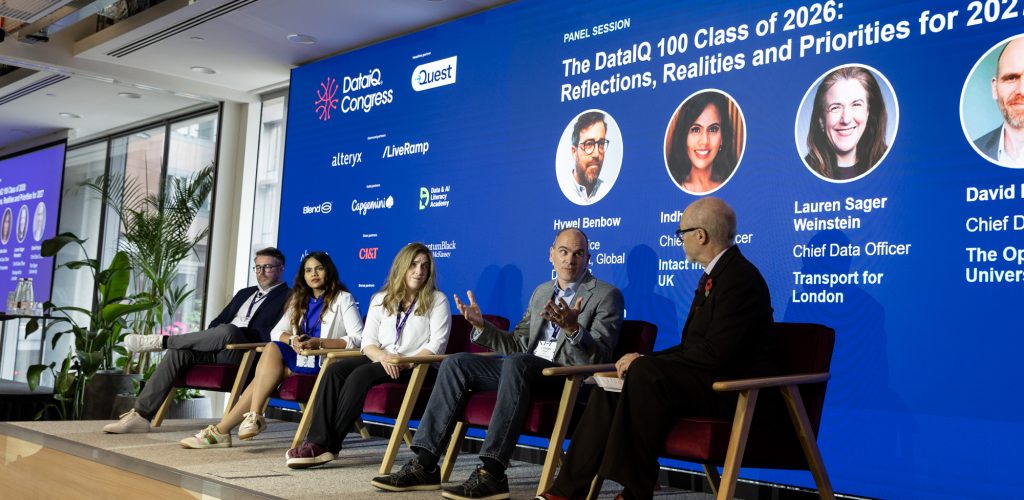
For senior data and AI leaders, external recognition is personal, but the organisational value it delivers can make monumental differences to how data is viewed within a business. At DataIQ Congress 2026, David Hayes, Chief Data Officer at The Open University; Lauren Sager-Weinstein, Chief Data Officer at Transport for London; Hywel Benbow, Senior Vice President, Global Data, AI and Analytics at GEMS Education; and Indhira Mani, Chief Data Officer at Intact Insurance UK, discussed what being recognised in the DataIQ 100 means in practice, and how leaders can turn that recognition into greater organisational impact.
Make individual recognition about the team
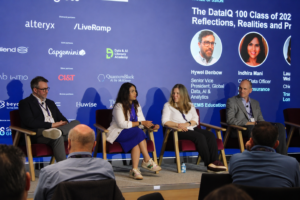
For David, the strongest internal impact of recognition is what it signals to the wider team, explaining that teams can see their work being recognised through their leader. He added: “Being a leader is all about being part of a team.”
That distinction matters. Data and AI leaders now operate across complex, multidisciplinary teams, where success depends on expertise that seldom receives the
same external visibility as the CDO or executive leading the function. Recognition within the DataIQ 100 gives leaders an opportunity to redirect attention towards the people responsible for delivering the work.
Lauren made a similar point, connecting recognition to the contributions of colleagues and the useful things they have built for the organisation and its people: “It’s about building up all the contributions of our colleagues. And that’s what makes me proud.”
The practical lesson is to use individual recognition to reinforce collective achievement. Leaders can make the accolade internally meaningful by connecting it to the teams, capabilities, and outcomes that made it possible.
External validation opens internal doors
Recognition can have a less visible but potentially more consequential impact by giving data and AI leaders additional leverage inside their organisations. David noted that recognition “does open doors internally”, helping to advance data, AI, and insight within the organisation.
For leaders competing for investment, senior sponsorship, or organisational attention, that credibility is invaluable. External validation is not a substitute for demonstrating business value, but it can establish that the organisation’s data capabilities (and the people building and running them) deserve attention. Indhira was clear on this: “It builds more credibility internally that you’re recognised externally. I think that’s very, very important.”
This was bolstered by Hywel: “I think in terms of the personal profile, you get that recognition for the job you’re doing yourself. But I think within my organisation, it is essential to have that external validation.”
Data leaders must convert recognition into organisational momentum. That could mean using the increased visibility to bring stakeholders into a difficult transformation programme, champion a team’s achievements with the board, or create conversations about data and AI that were previously hard to start.
Recognition is a responsibility

A sharp challenge to conventional thinking about professional recognition came from Indhira: “Recognition is not a trophy… I see it as a responsible recognition for not just me, but for my team and for the people who have contributed for me to be here.”
Rather than viewing inclusion in the DataIQ 100 as validation of work already completed, Indhira showed that recognition creates an expectation to keep contributing. “It gives me more responsibility,” she said. “This is not something I take lightly. I take it seriously for the teams, for my stakeholders, and for everybody who has contributed to get my name in that list.”
The industry is at a moment in time when the remit of senior data leaders continues to expand, which means external recognition creates a platform and leaders must decide how to use their increased visibility deliberately:
- Share lessons with peers
- Advocate for the profession
- Create opportunities for the next generation of leaders
- Use the credibility to push important conversations inside the organisation
Learn when to be quiet, but never silent
Recognition brings greater visibility and for data and AI leaders moving into the C-suite and boardroom, that requires becoming comfortable as a public advocate for the function, while finding the confidence to create opportunities rather than waiting for them.
The panel drew an important distinction between being quiet and being silent, highlighting that listening, observing, and understanding the organisation are essential, but that silence can prevent influencing the decisions that matter. At times, leaders need to “kick the door in” to create opportunities for themselves and their teams, and that takes practice.
That confidence must be grounded in business context, which was demonstrated in DataIQ reports throughout 2026. Data and AI leaders need to learn how the organisation works, observing where decisions are made, and understanding the pressures facing their stakeholders. Technical credibility may earn a leader a seat at the table, but understanding the business enables them to keep the seat and grow their influence.
There is an essential human dimension to that leadership. Authenticity and kindness matter, particularly when transformation does not go to plan. A failed pilot, a difficult stakeholder conversation, or a setback in an AI programme can test even experienced leaders.
This is where a trusted peer community like DataIQ gives leaders somewhere to test their thinking, learn from others who have experienced similar setbacks, and build the resilience to bounce back when an initiative fails.
The lesson from the 100 alumni is to be more visible, but to know when to listen, when to speak, and when to push. For leaders navigating the continually shifting CDO role, influence comes from combining a deep understanding of the business with the confidence to make their voice heard.
Make recognition useful
The value of recognition depends on what happens after it is given. It can strengthen teams by giving their work external visibility, it can provide leaders with additional credibility when engaging stakeholders, and it can create a greater sense of responsibility to contribute back to the profession.
That shifts the question from “what does being recognised do for me as an individual?” into “what can I do with that recognition for my team and function?” For senior data and AI leaders, an accolade may recognise past impact, but its longer-term value lies in whether leaders:
- Use the platform to strengthen their teams
- Influence their organisations
- Help advance the wider data and AI community
Be part of the DataIQ 100
The DataIQ 100 recognises the data and AI leaders shaping their organisations and the profession around them. Explore the DataIQ 100 alumni, discover the community, and get involved.